 Skip to content
Expert Distillery Floor Coatings in Wilmington, NC
Blazer Coatings NC installs distillery floor coatings in Wilmington, NC, after reviewing production zones, chemical data, drainage, barrel movement, and shutdown time before recommending anything.


Distilling Is Not the Same as Brewing
Breweries and distilleries share wet production conditions, yet distillation creates additional considerations. Flooring still needs a product-specific chemical review.
Resistance to diluted wash water does not confirm resistance to concentrated alcohol or cleaning chemicals. Hot stillage and process discharge may also create rapid temperature changes. Blazer Coatings NC maps these conditions by area.
Urethane Cement for Distilling Areas
Urethane cement addresses the conditions that push standard resin systems past their limits in a distillery. Hot stillage discharge, caustic washdowns, and the concentrated loads of barrel handling can each challenge an underspecified floor.
Urethane cement’s chemistry handles those demands better, but the product still needs to be matched to the distillery’s specific temperatures and chemical concentrations. Texture also affects system design. Wet work zones may need more profile, while rolling barrel routes require manageable movement.
Blazer Coatings NC selects the proposed thickness and texture from the actual distilling process rather than a standard food-industry specification.
Quartz Flooring for Wet Production Zones
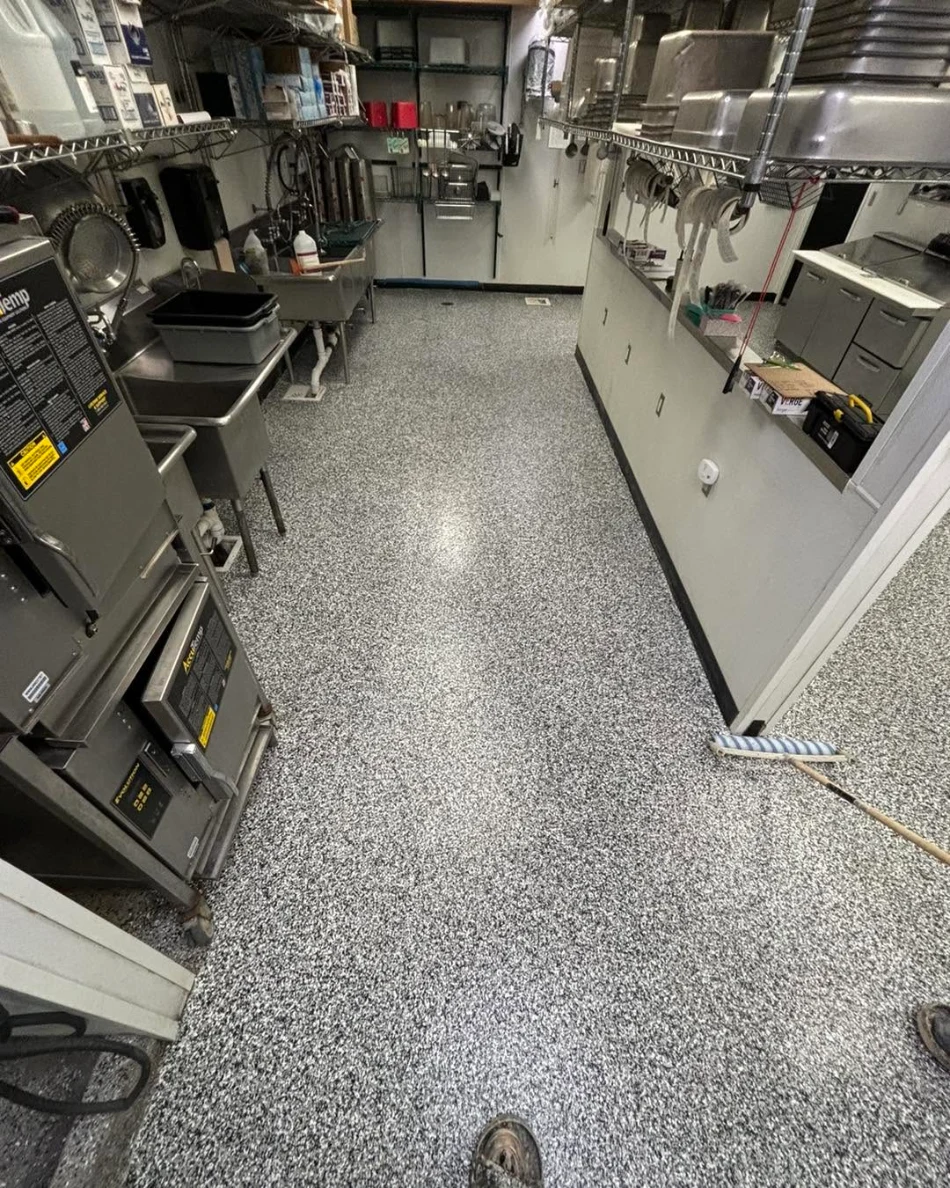
Quartz flooring uses colored aggregate inside a layered resinous system. The aggregate creates a textured finish for compatible production spaces.
Quartz in a distillery works best when the broadcast rate and grout coat are calibrated to the cleaning method rather than defaulting to the heaviest available profile. Distillery floors that see squeegee work after every washdown need a texture that moves liquid without gripping the tool.
Blazer Coatings NC reviews cleaning equipment and production residue before setting the aggregate specification.
Distillery Epoxy Flooring

Standard epoxy may not suit zones exposed to severe thermal cycling or concentrated chemicals. Urethane cement can provide a more suitable option in those areas. Solid color epoxy may work in dry storage, packaging, or lower-exposure production zones when product data supports the use.
The system may include a primer, body coat, aggregate, and compatible topcoat.
Each layer should serve a defined operating need. Blazer Coatings NC explains where epoxy offers value and where another material deserves consideration.
High-Proof Alcohol Requires Exact Product Review
High-proof spills should never be treated like ordinary beverage residue. High-proof alcohol does not behave like the diluted cleaning residue that most resin resistance data is built around.
The concentration at the point of spill, the contact time before cleanup, and if the spill occurs during a production run or a controlled lab process all change the chemical demand on the coating surface. Blazer Coatings NC reviews those specific conditions before any system receives approval for distilling areas.
Barrel Routes and Concentrated Loads
Rolling or handling barrels can also create impact and abrasion. The floor should remain flat enough for controlled movement. Spalled joints and damaged patches can interrupt routes or affect rolling equipment.
Color may assist with identifying leaks or storage boundaries. The facility remains responsible for approved safety markings and rack design. Blazer Coatings NC reviews barrel routes before selecting system texture and defining repairs.

Drains, Slope, and Spill Movement
Distillery drainage planning has to happen before the flooring conversation starts. The slope, drain locations, and low areas that define where liquid collects determine if the coating will support a clean washdown or hold process residue against the surface between batches. Blazer Coatings NC maps water movement during the site visit and identifies drainage corrections that belong outside the flooring scope before the coating scope gets defined. Standing liquid may reveal problems that resurfacing alone cannot correct.
Installation Inside a Controlled Facility
A distillery coating project requires coordination with facility safety procedures. Work zones may exist near flammable liquids or classified areas. The distillery determines required shutdown, isolation, and ignition-control measures.
Blazer Coatings NC then plans flooring tasks within those approved boundaries. Blazer Coatings NC provides those specific timelines before the shutdown begins so production restart is planned around the floor, not discovered against it.
Why Distilleries Choose Blazer Coatings NC
Alcohol Exposure Gets Specific Review
Concentration, contact time, heat, and cleaning methods guide material selection.
Thermal Zones Stay Separate
Stillage routes and hot wash areas receive specifications based on actual temperatures.
Barrel Movement Enters the Plan
Rolling paths, rack loads, joints, and floor flatness receive attention before installation.
Safety Authority Stays With the Facility
Blazer Coatings NC works within approved shutdown, access, ventilation, and ignition-control procedures.
Frequently Asked Questions
Can distillery epoxy resist high-proof alcohol spills?
It depends on the epoxy formula, alcohol concentration, contact time, and cleanup. Provide expected proof levels before selection. Blazer Coatings NC compares those details with available manufacturer resistance data.
Is urethane cement required across the entire distillery?
Not necessarily. It may suit hot or demanding production zones, while packaging or storage areas need another system. Blazer Coatings NC evaluates each area instead of applying one specification everywhere.
Can coating work happen near active spirit production?
Only under the distillery’s approved safety plan. Flammable liquids and vapors require controlled operations. The facility determines shutdown, ventilation, ignition control, and access before Blazer Coatings NC begins flooring work.
Can a resinous cove replace wall base trim?
A resinous cove can create a curved floor-to-wall transition in compatible areas. However, it does not replace every required wall finish or containment detail. The facility design team should confirm the approved assembly.
When can barrels return to the coated floor?
Barrel loads may require more curing than foot traffic. The system, temperature, barrel weight, rack design, and movement method affect timing. Blazer Coatings NC provides product-specific return guidance.
Prepare the Floor for Every Finished Batch
Blazer Coatings NC assesses each production area on its own terms and prepares a distillery floor coating proposal in Wilmington, NC, built around what each zone actually handles rather than what looks adequate from the doorway.
Fast Response. No obligation.
Licensed & Insured.
Our Projects

how it works
get in touch
Reach out by phone or fill out the online form. Tell us about your floor and location. The team responds fast and keeps it straightforward from the first conversation.
on-site inspection
We offer free on-site or online estimates. The crew assesses your concrete, identifies prep requirements, and recommends the right coating system. The price quoted is the price charged.
schedule install
Diamond grinding and proper surface preparation happen before any coating goes down. Installation is carried out with professional-grade materials, proven methods, and no shortcuts.
enjoy your floor
Your concrete is now Blazer!
The floor is inspected before the crew leaves. Coverage, adhesion, and appearance are all checked. Warranty documentation is provided.
RECENT BLOG
- Coastal Prep

Aug 20, 2026
- Flake Systems

Aug 10, 2026
- Coastal Prep

Aug 10, 2026
- Coastal Prep
Aug 20, 2026
- Flake Systems
Aug 10, 2026
- Coastal Prep
Aug 10, 2026
- Garage Floors

Aug 10, 2026