 Skip to content
Top Warehouse Floor Coatings in Wilmington, NC
Warehouse floors wear fastest along loading paths, equipment routes, and storage zones. Blazer Coatings NC installs warehouse floor coatings in Wilmington, NC, after reviewing traffic, cleaning, layout, and shutdown needs.


Warehouse Flooring Starts With a Traffic Map
Warehouse floors wear unevenly, especially along aisles, loading zones, and turning points. Blazer Coatings NC maps traffic, equipment loads, spills, chemicals, and moisture before specifying the system. Some areas may share one build, while high-stress zones may need separate treatment.
Solid Color Epoxy Warehouse Flooring
Solid color epoxy creates a uniform finish that can support active warehouse interiors. It also provides a clear background for markings and defined work areas. Darker colors may disguise certain marks but reduce visual brightness.
A complete epoxy system can include a primer and a topcoat. The number and type of layers depend on the concrete and expected exposure. Blazer Coatings NC selects the complete build based on the operating conditions.
Quartz Flooring for Demanding Zones
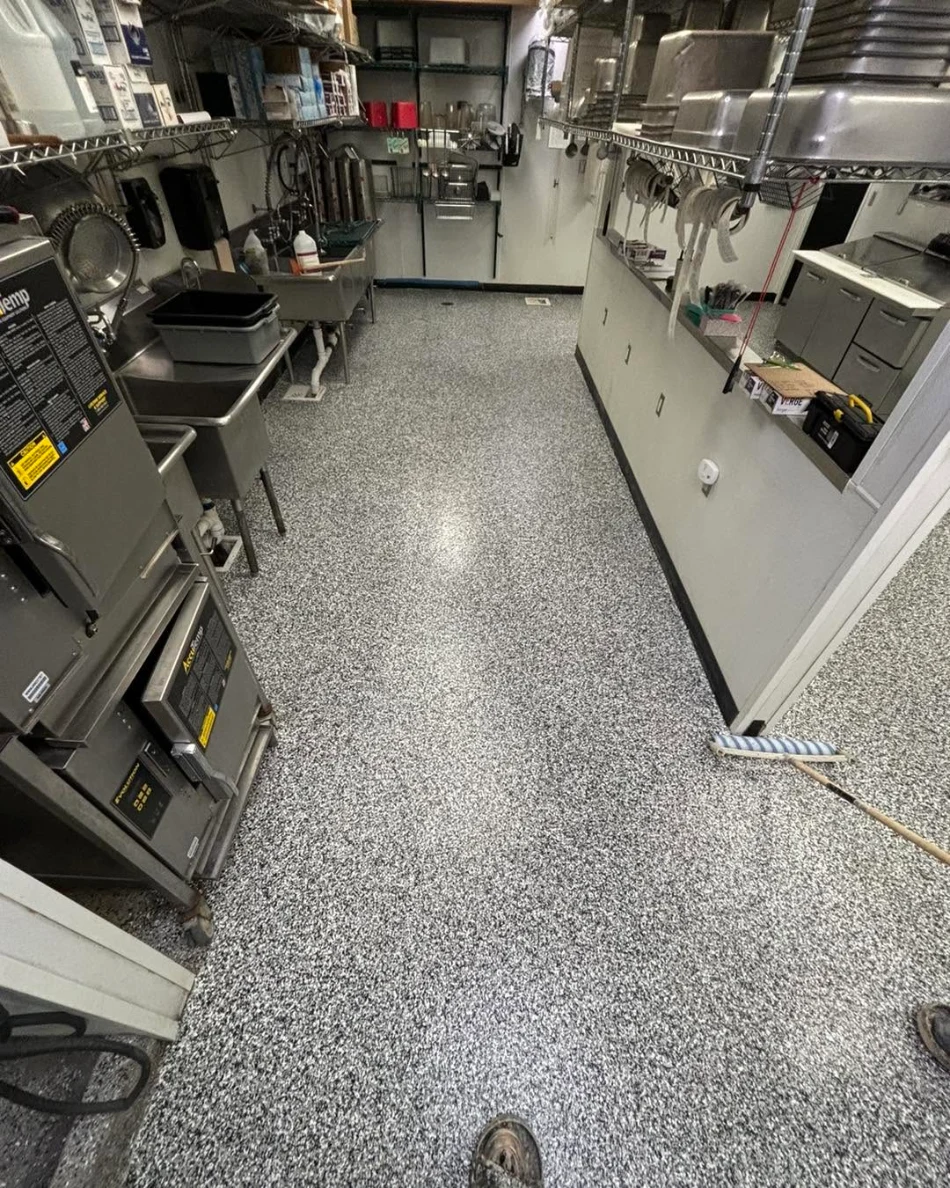
Quartz flooring uses colored aggregate within a layered resinous system. The broadcast creates texture and can provide a more substantial finish for selected areas. Warehouse zones exposed to moisture or repeated cleaning may benefit from quartz. Blazer Coatings NC may recommend quartz across the full floor.
Polished Concrete for Warehouse Floors
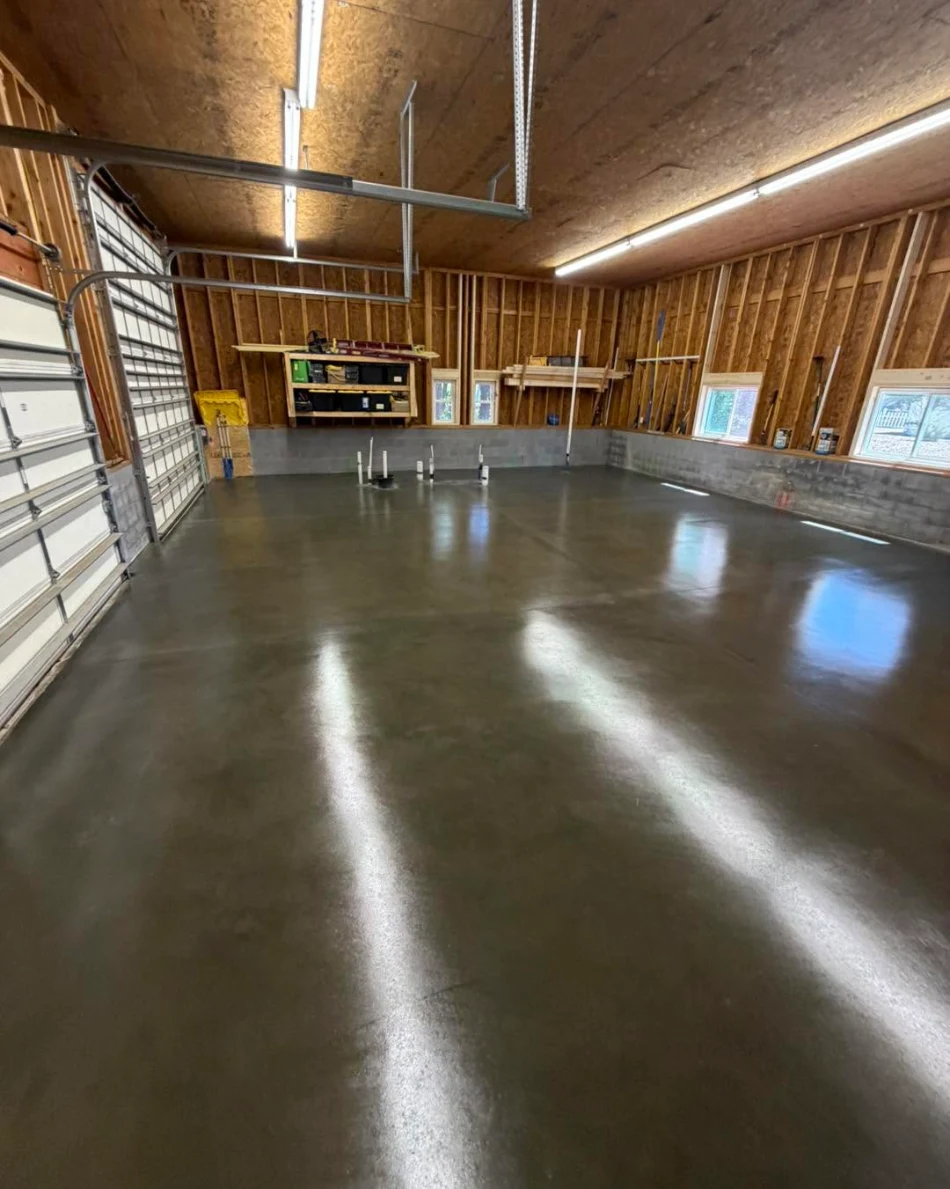
Polished concrete refines the slab itself, creating a durable, reflective finish without a resinous coating. Existing repairs, stains, and aggregate may remain visible. Blazer Coatings NC compares slab condition, spill exposure, cleaning, and desired polish level before recommending it for warehouse use.

Grind and Seal Warehouse Flooring
Grind and seal prepares concrete mechanically, then protects it with a topical sealer. It can suit storage and light-duty areas, but the sealer will wear and need maintenance. Blazer Coatings NC helps buyers compare grind and seal with polished concrete and epoxy based on appearance, upkeep, and long-term use.
Urethane Cement for Harsh Exposure
Urethane cement can suit warehouse areas exposed to heat or demanding process conditions. It combines resin technology with cementitious materials. Product thickness, texture, and chemical resistance depend on the application. Facility managers should identify expected substances.
The product should match the actual exposure rather than a general description of heat resistance. Blazer Coatings NC recommends urethane cement only where the operating demands support it.

Moisture Beneath Warehouse Concrete
Large warehouse slabs can contain different moisture conditions across the same building. Older construction may also have an uncertain vapor barrier below the concrete. Visible signs can include dark areas or a coating that lifts in sections.
Moisture testing helps compare the slab with the proposed product limits. If results exceed the coating’s tolerance, a compatible moisture vapor barrier may become part of the system. Large warehouse slabs can sweat on their surface when warm, humid Wilmington air contacts cool concrete.
Blazer Coatings NC distinguishes between the two before recommending a primer system, barrier, or ventilation conversion. A floor coating cannot correct building humidity or active water entry by itself.
Repairs, Cracks, and Warehouse Joints
Warehouse cracks and joints receive repeated pressure from equipment crossing them. Control and expansion joints also serve different purposes. Filling the wrong joint with a rigid material can transfer movement into the repair.
Spalled joint edges may require rebuilding before installation. Their condition can affect traffic and the finished transition. Self-leveling materials can correct certain surface irregularities, although they cannot stop structural movement.
They also should not be treated as a simple drainage repair. Blazer Coatings NC identifies these conditions before defining the warehouse floor coating scope.
Floor Markings and Operational Zones

Warehouse floor markings can define aisles, pedestrian routes, storage, and restricted zones. Blazer Coatings NC plans color, placement, and material around the actual traffic pattern so markings stay visible and wear appropriately. Layouts should be finalized before installation to avoid unnecessary downtime or rework.
Why Warehouses Choose Blazer Coatings NC
Traffic Routes Shape the Specification
Aisles, turning zones, loading areas, and storage patterns guide material and thickness decisions.
Shutdown Planning Begins Early
Managers receive clear access, preparation, curing, and reopening expectations before installation.
Slab Conditions Enter the Scope
Diamond grinding, moisture testing, cracks, and joint repairs receive attention before coating begins.
Commercial Terms Stay Defined
Warehouse estimates from Blazer Coatings NC define the full scope before the shutdown begins. Pricing holds to the agreed work, and the founders’ direct involvement keeps the installation accountable from the first grinding pass to reopening.
Frequently Asked Questions
Can a warehouse remain partly operational during coating?
Phased work may allow partial operation when the layout provides separate access and safe boundaries. Ventilation, grinding, application, and curing requirements must also support the plan. Blazer Coatings NC confirms staging after reviewing the building.
Should warehouse expansion joints receive epoxy filler?
Not automatically. Expansion joints allow movement and may require a flexible treatment. Rigid epoxy in the wrong joint can crack or transfer stress. Blazer Coatings NC identifies joint function before recommending any repair.
Can polished concrete handle warehouse chemical spills?
Polished concrete can suit many warehouse environments, but it does not provide the same chemical resistance as every resinous system. Spill type, concentration, contact time, and cleanup procedure should guide the comparison.
How soon can lift equipment return after installation?
The timeline depends on the system, temperature, humidity, equipment weight, and turning forces. Foot traffic may resume earlier. Blazer Coatings NC provides separate reopening guidance for walking, straight movement, and full warehouse operation.
Can coating stop a Wilmington warehouse floor from sweating?
Not necessarily. Condensation can form when warm, humid air reaches cooler concrete. Moisture vapor may also move through the slab. Blazer Coatings NC evaluates the likely source because a coating cannot correct uncontrolled indoor humidity.
Put the Warehouse Floor Back Into Service Ready
A warehouse shutdown is the best time to get the floor right. Blazer Coatings NC builds Wilmington warehouse coating plans around slab condition, traffic, cleaning, and operational demands before reopening.
Fast Response. No obligation.
Licensed & Insured.
Our Projects

how it works
get in touch
Reach out by phone or fill out the online form. Tell us about your floor and location. The team responds fast and keeps it straightforward from the first conversation.
on-site inspection
We offer free on-site or online estimates. The crew assesses your concrete, identifies prep requirements, and recommends the right coating system. The price quoted is the price charged.
schedule install
Diamond grinding and proper surface preparation happen before any coating goes down. Installation is carried out with professional-grade materials, proven methods, and no shortcuts.
enjoy your floor
Your concrete is now Blazer!
The floor is inspected before the crew leaves. Coverage, adhesion, and appearance are all checked. Warranty documentation is provided.
RECENT BLOG
- Coastal Prep


Aug 20, 2026
- Flake Systems

Aug 10, 2026
- Coastal Prep

Aug 10, 2026
- Coastal Prep
Aug 20, 2026
- Flake Systems
Aug 10, 2026
- Coastal Prep
Aug 10, 2026
- Garage Floors

Aug 10, 2026